Adding a Gas Line for an Outdoor Kitchen or Fire Pit in Lake Forest, CA
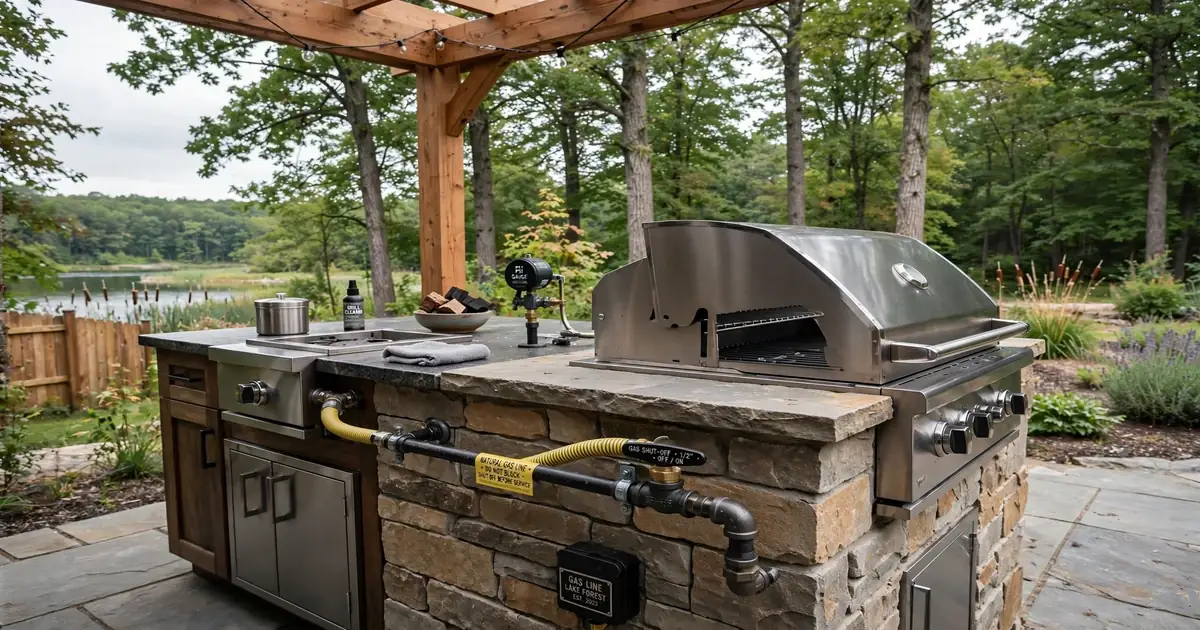
A new gas line for an outdoor kitchen or fire pit needs a permit, pipe sized for the total gas load, a shutoff valve at each appliance, and a pressure test before anyone turns the gas on. Check capacity first, because a line sized for a tank water heater may not carry a tankless unit plus a barbecue and a fire feature.
What the Project Involves
An outdoor gas line is a branch from the existing house piping to the patio. A plumber measures the route, adds up the gas demand of every appliance on the system, and chooses a pipe size that can deliver it. The line then runs through a wall or under the ground, ends at a shutoff valve at each appliance, and is pressure tested.
Outdoor kitchens and fire features have grown popular in southern California planned communities. They add appliances that run at the same time as the furnace and the water heater, so the total demand matters more than any single appliance.
Planning Notes by Appliance
| Appliance | What drives its gas demand | Planning note |
|---|---|---|
| Built-in barbecue | Burner size and number | Check the manufacturer's rating and shutoff location |
| Fire pit or fire table | Burner and flame size | Fire features can draw a lot, and some need a key valve |
| Side burner or warming drawer | Burner rating | Small but adds to the total |
| Patio heater | Output rating | Needs clearance and correct supply |
| Tankless water heater | Large demand when running | Often needs a larger line than a tank unit |
Always use the manufacturer's rating for each appliance, not a general estimate.
Permit and Inspection
New gas piping and most modifications require a permit and an inspection in California. The California Plumbing Code, which is built on the Uniform Plumbing Code (UPC), covers sizing, materials, and testing of fuel gas piping. An inspector checks the work before anyone turns the gas on.
A permitted line protects you. It is documented, it passed inspection, and it will not surprise a buyer's inspector or an insurance adjuster. See gas line installation and repair for the full process and the safety steps if you smell gas.
Plan Before You Dig
These steps prevent the most common problems.
- Call 811Underground utilities must be marked before digging.
- List every appliance and its ratingInclude the ones you plan to add later.
- Ask whether your meter and line have capacityThe gas utility owns the meter, and a plumber can tell you if the house line is adequate.
- Plan the route and the depthBuried gas piping has code requirements for protection and depth.
- Get association approval firstIn a planned community, check whether the architectural committee must approve outdoor work.
Baker Ranch, Foothill Ranch, and Association Rules
Planned communities such as Baker Ranch have associations with architectural standards. Outdoor kitchens and fire features often need approval, and the approval process can take longer than the plumbing. Ask your association for the guidelines before you buy appliances.
Homes that already have a tankless water heater are the ones most likely to have a stretched gas line. The load of a tankless unit is covered under tankless and tank installation, and it is a reason to size the line properly the first time.
How the Work Is Done
Plan and size
The plumber adds up the load and chooses the pipe size.
Permit
A permit is pulled before work starts.
Install
Pipe, fittings, and shutoff valves are installed.
Test and inspect
The plumber pressure tests the line, and an inspector checks it before anyone turns the gas on.
Safety Rules for Fire Features and Outdoor Appliances
Manufacturers design outdoor gas appliances for open air. Never use them indoors or in an enclosed space, since they can produce carbon monoxide. Follow the manufacturer's clearances from walls, fences, overhangs, and plants, because heat and flame can damage them or start a fire.
Fire features often need a key valve or a control that shuts off the gas, and a pilot or igniter that works reliably. Keep the burner free of debris and check the connections for leaks after any move or repair. If you smell gas, turn off the appliance, leave the area, and call 911.
What the Plumber Needs From You
Having these ready speeds the quote and the permit.
- The model and rating of each applianceThe data plate or the manual lists the gas demand.
- The planned location and routeA sketch or photos of the patio and the house wall help.
- Information about existing gas appliancesThe age and rating of the furnace, the water heater, and the range matter.
- Your association's approval, if requiredA copy of the approval letter belongs with the permit.
- A plan for the surfaceConcrete and pavers may need cutting or restoration.
Common Mistakes to Avoid
The most frequent mistake is buying appliances before checking the gas supply. A grill, a fire table, and a heater together may exceed what a line sized for one appliance can deliver. Another is running a line with no shutoff valve at the appliance, which makes service and emergencies harder.
A third is skipping the permit. An unpermitted gas line is a problem at a home sale and at an insurance claim. It also means no inspector has tested the work, which is the whole point of the process.
What to Expect From Start to Finish
Most of the time goes to planning and approvals, not to the pipe. Measuring, sizing, and drawing the route comes first, then the association's approval where it is required, then the permit. The installation itself is usually quick, followed by the pressure test and the inspection.
The utility may briefly interrupt gas service to the house during the connection, and any trenching or cutting leaves a surface to restore. Ask for a realistic schedule in writing, and ask who handles restoration of concrete, pavers, or landscaping.
Gas Appliance Basics Before You Buy
Check the fuel first. Homes in most of Orange County have natural gas, but manufacturers sell many outdoor appliances set up for propane, and those need a conversion kit to run on natural gas. Confirm in the manual that the model is rated for your fuel, and buy the correct orifice or conversion kit from the manufacturer.
Look for units rated for outdoor use and check the clearances to combustible materials such as fences, eaves, and plants. Ask for the gas demand in the rating, and keep the paperwork for the permit. Make sure the shutoff valve will be easy to reach once the appliance is set in its enclosure.
Finally, think about service access. A built-in grill that is boxed in with no access to the connection is expensive to repair. Leave room for a plumber to reach the valve and the fitting.
Outdoor Gas Line Questions
California requires a permit for gas piping, and an error can be dangerous. A licensed plumbing contractor should do the work.
Yes. A shutoff valve at each appliance lets you isolate it for service or in an emergency.
A plumber uses a pressure test and a leak detector. A soap solution can show a small leak at a joint. If you smell gas, leave the house and call 911.
A larger line can be run from the meter, or the load can be reduced. A plumber will recommend the better option.
Approved flexible connectors are used for appliances, but they should be rated for the application and installed correctly.
Plumbing Problem Right Now?
Call the 24/7 line. The price is quoted before work starts.
Call (949) 325-3122Service Area Map: Lake Forest, Foothill Ranch, Portola Hills
The map shows the Lake Forest area we dispatch to, including ZIP codes 92630, 92610, and 92679.