Septic or Sewer? How to Tell Which One Your Home Has in Trabuco Canyon, CA
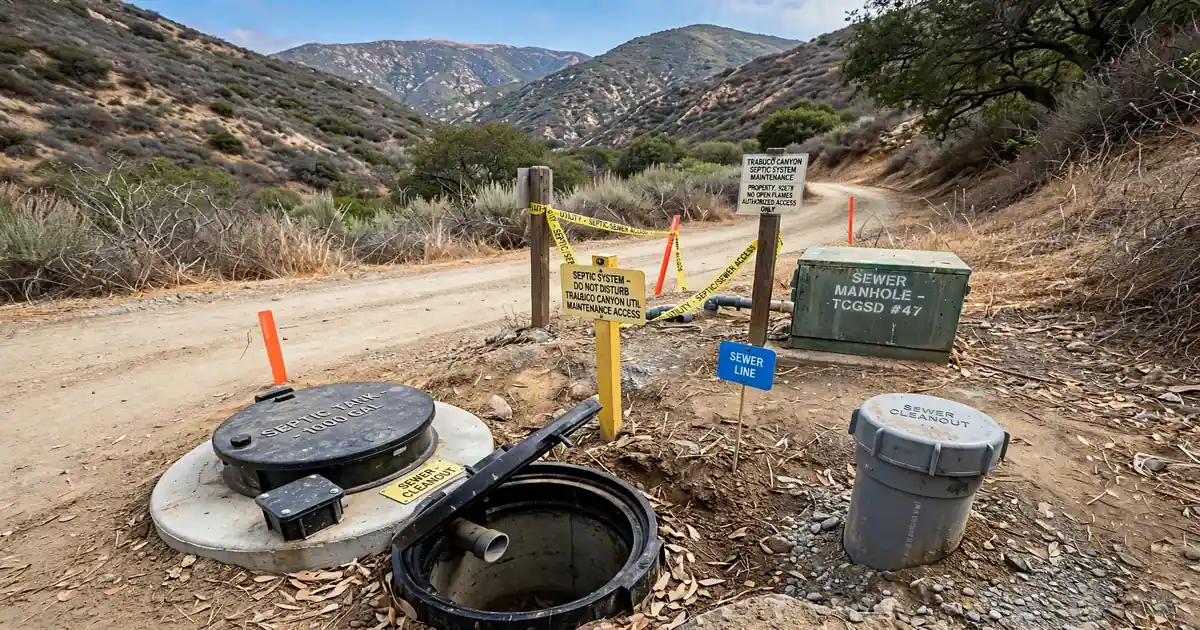
The fastest way to tell is your water bill: a separate sewer charge usually means a public sewer connection. No sewer charge on a home outside a sewer district often means septic. Trabuco Canyon includes homes on both, and some on private wells. Confirm with your district or your property records before you call a plumber or a septic company.
Why It Matters in Trabuco Canyon
Trabuco Canyon is an unincorporated community in the foothills of the Santa Ana Mountains. Trabuco Canyon Water District serves Trabuco Canyon, Robinson Ranch, Trabuco Highlands, Walden, Rancho Cielo, Portola Hills, Santiago Canyon Estates, and Dove Canyon, and the district built a wastewater treatment plant in 1984 together with the Robinson Ranch development.
Not every property is inside that sewer service, though. Some canyon homes still rely on a septic tank and a leach field, and some use a private well. A backup means one thing on a public sewer and something different on a septic system, so the first question is which one you have.
Clues to Check
| Clue | Points to sewer | Points to septic |
|---|---|---|
| Your water bill | A separate sewer or wastewater charge | No sewer charge |
| The yard | A cleanout cap near the foundation or the street | A buried tank with one or two lids, and a flat leach field area |
| Property records | A sewer connection permit or a lateral on the plot map | A septic permit or tank diagram |
| A pumping record | None | Invoices for tank pumping every few years |
Three Ways to Confirm
Read the bill
Look for the sewer line item, and note the district name.
Call the district
Trabuco Canyon Water District or your sewer provider can say whether your address is connected.
Check your closing documents
Septic systems usually appear in inspection reports and permit records.
If It Is Septic: The Basics
A septic system treats wastewater in a buried tank, then sends the liquid to a leach field. The tank needs pumping every few years, and according to the EPA, every three to five years is typical for a household. Pumping is done by a septic company, not a plumber.
Protect the system. Keep vehicles and heavy equipment off the tank and field, spread laundry through the week, and avoid putting grease, wipes, and harsh chemicals in the drain. Strong drain openers can upset the bacteria the tank depends on.
A slow drain or a backup on a septic home has several possible causes: a clog in the house line, a full tank, or a failing leach field. Telling them apart takes inspection, and the answer determines whether the plumber or the septic company is the right call.
Who to Call: Plumber or Septic Company
Call a plumber for a clog in the house plumbing, a slow fixture, or a leak. Drain cleaning covers clearing a blockage, and sewer lateral repair covers a damaged lateral on a public sewer.
Call a septic company if the tank is full, if wastewater is surfacing in the yard, or if several fixtures back up at once. Tell the plumber what you suspect, and a good one will say honestly when the tank is the problem. Our page on Trabuco Canyon explains what we handle on septic and well properties and what we do not.
Warning Signs a Septic System Needs Attention
A septic system gives clues before it fails. These are the common ones.
Slow drains throughout the house
A full tank or a blocked outlet can slow every fixture.
Gurgling in the pipes
Air is being pushed through a restricted line.
Sewage odors near the tank or field
Gas escaping from a failing system.
Wet or unusually green ground over the field
Effluent may be surfacing.
Backups after laundry or heavy use
The system cannot absorb the extra water.
Standing water over the tank
A sign of a problem in the tank or the field.
What a Plumber Can Do on a Septic Home
A plumber can clear a clog in the house drain lines, repair or replace a broken pipe between the house and the tank, and find a missing cleanout. A camera can show whether the problem is in the house line or farther along.
A plumber does not pump the tank, repair the tank itself, or fix a failing leach field. When a visit shows the tank is full or the field is failing, an honest plumber says so, and you call a septic company. That is the reason to know your system before you call.
A Short Note on Wells and Pressure Tanks
Some canyon properties have a private well. A well system has a pump and a pressure tank, and low pressure or sputtering faucets often come from the pump, the tank, or the well itself. Those are well contractor issues.
The plumbing from the pressure tank into the house is a plumber's job, including the regulator, the water heater, and the fixtures. If you are not sure which side a problem is on, describe it to the dispatcher and ask. The Trabuco Canyon page lists what we handle there.
Questions to Ask a Septic Company
When you call a septic company, ask what the visit includes. A pumping may or may not include an inspection of the tank, the baffles, and the outlet. Ask for a written record of the tank size, the condition, and the date, and keep it with your home papers.
Ask whether they can locate the lids, since many homeowners do not know where theirs are. Keep a sketch of the tank and field locations and the pumping dates. That record helps the next owner, the next technician, and you.
Storms, Soil, and Buying a Canyon Home
After heavy rain, the soil over a leach field can be saturated, and a saturated field absorbs less. Spread laundry across the week during storms, and direct roof and driveway runoff away from the field. Do not drive or park over the tank or the field, since the weight can crush pipes and compact the soil.
If you are buying a canyon property, ask for the septic permit history, the tank location and size, and the pumping records. Ask whether the property is on a district sewer, a septic system, or a mix, and whether it uses district water or a private well.
A well calls for a water quality test, and a septic system calls for an inspection by a septic professional. The answers set your costs for years, so get them in writing before the inspection period ends.
Make a One-Page Map of Your System
Once you know your setup, put it on one page. Sketch the house, the cleanout, the tank lids, the field, the well if there is one, and the water shutoff, and add the date of the last pumping. Keep a copy with your home papers and give one to anyone who services the property. The next owner will be grateful, and so will the technician who arrives during an emergency.
Septic and Sewer Questions
Sometimes. A septic tank has buried lids and a flat field area. A sewer home often has a cleanout cap. Records and the bill are more reliable.
No. Many homes in the district's service areas are on public sewer, and some on septic. It depends on the address.
The EPA suggests every three to five years for a typical household. Your usage and the tank size change that.
Start with a plumber if only one fixture is slow. If many fixtures back up or the yard is wet, a septic company is likely needed.
The well and its pump belong to a well contractor. The plumbing inside the house is still a plumber's job.
Plumbing Problem Right Now?
Call the 24/7 line. The price is quoted before work starts.
Call (949) 325-3122Service Area Map: Lake Forest, Foothill Ranch, Portola Hills
The map shows the Lake Forest area we dispatch to, including ZIP codes 92630, 92610, and 92679.