Tree Roots in Sewer Lines: What Lake Forest Homeowners Should Know
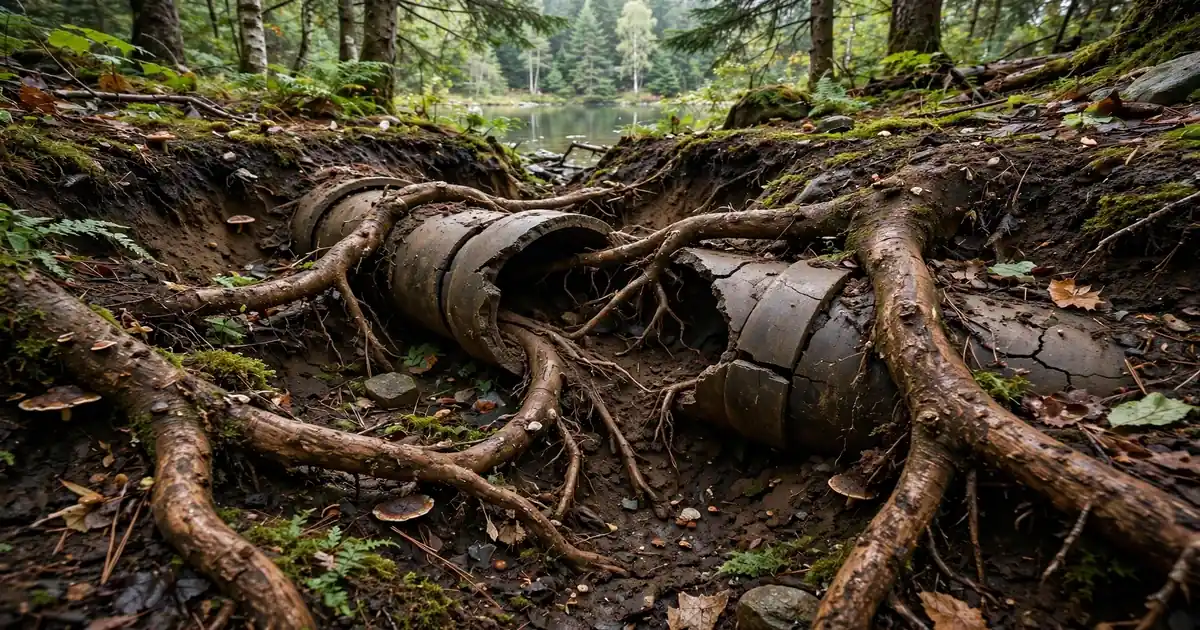
Tree roots enter sewer lines by following moisture to a joint or crack, then grow inside the pipe until it clogs. Lake Forest takes its name partly from a eucalyptus grove planted in the early 1900s, and mature trees are common in the older neighborhoods. A camera inspection shows whether roots are the cause, and hydro jetting clears them. A lasting fix repairs the opening they came through.
How Roots Get Into a Sewer Line
A sewer pipe is a small, steady source of water and nutrients in dry soil. Roots detect that moisture and grow toward any place it escapes, which is usually a joint, a crack, or a loose connection. Once a hair-thin root gets inside, the warm, wet pipe is an ideal place to grow, and it thickens into a mat that catches paper and grease.
That is why a root problem returns. A cable or jet that clears the root mass leaves the opening intact, and the roots grow back from the stub. The clog may return in months, or in a year or two, depending on the tree and the soil.
Signs of a Root Problem and What They Suggest
| Sign | What it suggests | Next step |
|---|---|---|
| Slow drains throughout the house | A partial blockage in the main line | Camera inspection |
| Gurgling when water drains elsewhere | Air pushed through a restricted line | Clear and inspect |
| A backup that returns every few months | Roots regrowing from an opening | Jet, camera, then repair the opening |
| Lush, wet patch above the lateral | A leak that roots have found | Locate and repair |
| Backup after heavy rain | Soil movement and wet roots stressing joints | Camera inspection |
Lake Forest's Trees and Older Laterals
According to local history, Dwight Whiting planted more than 400 acres of eucalyptus in the early 1900s, and the city takes part of its name from that forest. Eucalyptus is a tall, thirsty tree with aggressive roots, and mature specimens are still common in the older neighborhoods around El Toro Road and Lake Forest Drive.
Those streets were built mostly in the 1970s and 1980s, so their laterals are four to five decades old. Older pipe has more joints, more movement, and more places for roots to enter. That combination is why root intrusion is a common cause of repeat backups here. Not every house is affected, and the camera shows which are.
What a Root-Clearing Visit Includes
Camera first
A camera shows the roots, the pipe material, and where the openings are.
Clear the line
A cable cuts the roots, or a jet scours the pipe walls. Hydro jetting clears more of the mass than a cable.
Camera again
A second look confirms the line is clear and notes the openings.
Decide on the fix
You see whether the pipe needs a spot repair, lining, or replacement.
Clear, Repair, or Replace
| Situation | What helps | Why |
|---|---|---|
| Light roots, sound pipe | Jet now and again on a schedule | The opening is small and the pipe is otherwise healthy |
| Roots at one or two joints | Spot repair or lining | Seals the opening the roots use |
| Roots at many joints, or a collapsed section | Replacement | The pipe is failing along its length |
Chemical Root Killers and Yard Choices
Foaming and crystal root killers are sold at hardware stores. They can burn back roots inside the pipe for a time, and they do not repair the opening. Some products are harsh on the pipe, and the label should say what it is safe for. They are a stopgap, not a cure.
In the yard, the long-term choices matter more. Know where your lateral runs, keep large water-loving trees away from it, and call 811 before any digging. If you are planning new landscaping, ask a plumber for the lateral's location first. For the broader picture of how the homepage covers the city, see emergency plumber in Lake Forest.
Preventing Roots Without Removing Every Tree
You do not have to cut down a healthy tree to protect a sewer line. Know where the lateral runs, which a plumber can trace from the cleanout. Keep new trees and large shrubs well away from it, and favor species with less aggressive roots near the line.
Deep, infrequent watering draws roots downward and away from the pipe, while frequent shallow watering invites them toward surface leaks. Make sure the cleanout is accessible so a camera and cable can get in without digging.
For older laterals with a history of roots, some plumbers suggest a camera look every few years to catch problems early. That costs far less than an emergency backup, and the video becomes a record of how the pipe is changing.
What Affects the Cost of Dealing With Roots
The cost depends on what the camera finds. Clearing a light root mass with a cable is the least expensive option. Jetting costs more because it takes more equipment and time. A spot repair or lining costs more again, and a full replacement is the most expensive.
Other factors include the length and depth of the line, whether a cleanout exists, the surface above the pipe, and permits. Ask for the camera video and a written scope. A repeat clearing every year may cost more over time than a repair, which is worth weighing.
What to Do the First Time You See Roots
Do not ignore a repeat slow drain
A line that slows twice in a year deserves a camera.
Get the video and note the distances
The footage shows where the roots entered.
Clear the line
A cable or a jet restores flow, and a second look confirms it.
Plan the repair
Seal the opening with a spot repair or lining, or schedule regular clearing while you decide.
How Each Lateral Material Handles Roots
The pipe material changes both the odds of root entry and the repair options, which is why the camera report should name it.
| Material | How roots get in | What it means for repair |
|---|---|---|
| Clay | Short sections joined every few feet, and each joint is a possible gap | Roots are common, and lining or replacement often follows repeated clearing |
| Cast iron | Rust and scale roughen the inside, and corroded spots let roots through | Heavy scale may need cleaning before any lining can be applied |
| ABS or PVC plastic | Far fewer joints, and the joints are solvent-welded | Roots are rarer, and a break is usually from damage or settling |
| Fiber conduit | The material softens and deforms with age | Roots exploit the damage, and replacement is usually the answer |
A plumber confirms the material from the camera and from the age of the home, since several materials can appear on one street.
A Note for Buyers and Renters
If you are buying an older Lake Forest home with mature trees, a camera inspection of the lateral is worth ordering before you close, since roots are one of the most common findings. If you rent, tell the landlord or manager at the first sign of a repeat slow drain, in writing, so the record shows when the problem began and who was told.
Tree Root Questions
Roots usually enter through an existing crack or joint and widen it as they grow. They can contribute to a break, but the pipe was usually weak first.
It depends on the tree and the opening. Some lines need it every year or two until repaired. A camera shows how quickly the roots return.
It can stop new growth, but roots already in the pipe stay, and old roots keep growing for a time. The opening still needs repair.
Usually not for wear, age, or roots. Some policies offer a service line endorsement, so read yours.
In California the owner is generally responsible for the lateral from the house to the connection at the main.
Plumbing Problem Right Now?
Call the 24/7 line. The price is quoted before work starts.
Call (949) 325-3122Service Area Map: Lake Forest, Foothill Ranch, Portola Hills
The map shows the Lake Forest area we dispatch to, including ZIP codes 92630, 92610, and 92679.