Roof Leak or Plumbing Leak After Rain in Orange County: How to Tell
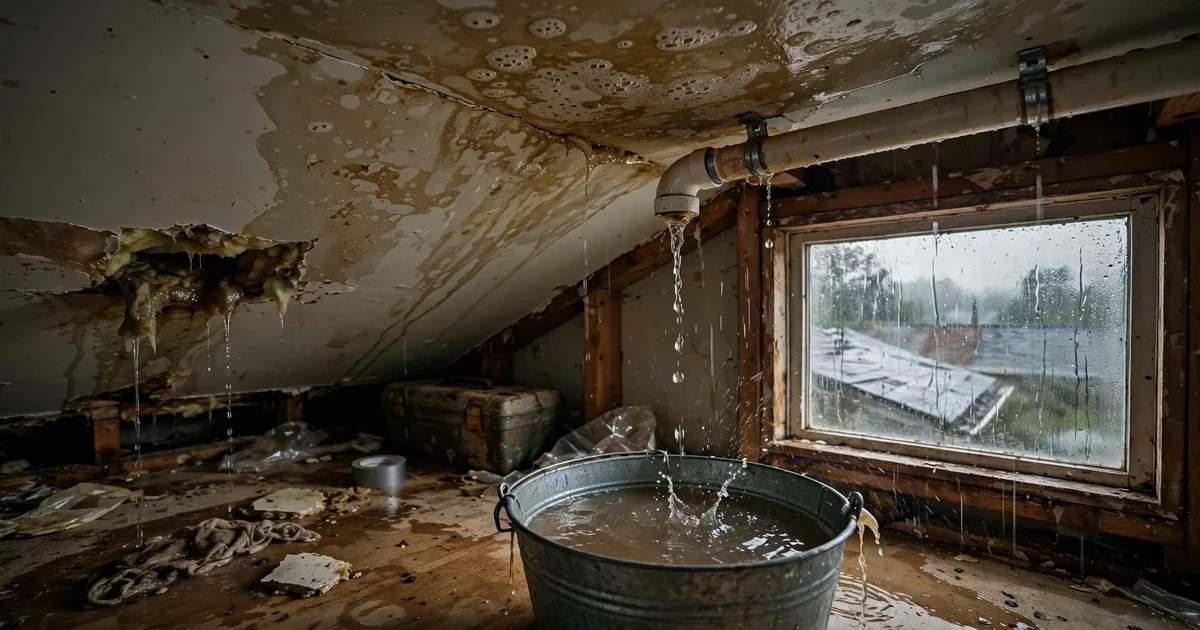
Timing is the best clue. A stain that appears only during or just after rain usually comes from the roof, flashing, or drainage. A stain that appears or grows in dry weather points to plumbing. A water meter that moves with every fixture off confirms a pipe leak. Check the timing, check the meter, then check the attic.
Clues That Point to the Roof or to the Plumbing
| Clue | Points to the roof or drainage | Points to plumbing |
|---|---|---|
| When the stain appears | During or right after rain | In dry weather, or it keeps growing |
| Where it appears | Below roof penetrations, valleys, or windows | Near bathrooms, kitchens, or the water heater |
| Water temperature | Cool and clear | Sometimes warm if it is a hot line |
| The meter | Does not move with all water off | Moves with all water off |
| Sound | Silent | Hissing or running water |
Three Tests You Can Do Today
The meter test
Turn off all water and watch the meter. If it moves, a pipe is leaking.
The timing log
Note when the stain changes. If it tracks the weather, the roof is the suspect.
The attic look
On a dry day, check the underside of the roof for dark stains, and look at the pipes and the water heater vent.
The garage and slab edge
Look for dampness at the base of walls during and after rain.
What the December 2025 Storms Showed
Storms in late December 2025 led the governor to declare a state of emergency that included Orange County. A week of rain tests every roof, window seal, and drainage path, and it is when many homeowners first notice a stain.
Rain tends to find the weak spots in a roof or a wall rather than burst a pipe. Still, wet weather and plumbing problems sometimes show up together, so test the meter before you assume.
Hillside Homes and Slab Edges
Homes on slopes, such as those in Portola Hills, send runoff toward the lowest point on the lot, which is often a garage or a slab edge. Water at the base of a wall after rain is usually a drainage issue, handled by grading, gutters, and downspouts, not a plumber.
A pipe leak under a slab looks different. Flooring warms or buckles, the meter runs, and the water heater may run more than usual. That case is covered under pipe leak testing.
What to Do Right Now
Whatever the source, a few steps limit the damage.
- Protect belongingsMove items away from the stain and place a bucket if it is dripping.
- Photograph the stainTake a photo with the date, and again as it changes.
- Do not poke a bulging ceilingA ceiling holding water can fail suddenly. Keep people out of the room.
- Dry it quicklyWet drywall and insulation should be dried within a day or two. See emergency drying.
- Call the right tradeA roofer for a roof leak, a plumber for a pipe leak, and both if you cannot tell.
Who to Call First
If the meter moves, call a plumber first. If it does not and the stain tracks the rain, call a roofer or a drainage contractor. If you cannot tell, a plumber can run a quick meter and pressure test, and that single step rules plumbing in or out.
Your insurer treats the two differently. A roof leak during a storm and a burst pipe are separate kinds of loss, so describe the cause accurately when you report it.
Common Roof and Drainage Culprits
If the evidence points away from plumbing, these are the usual suspects.
Flashing
Metal around chimneys, vents, and walls that can separate or corrode.
Roof valleys
Where two slopes meet, water concentrates and finds weak spots.
Tile cracks
Clay tile roofs, common in newer communities, can crack or slip.
Clogged gutters and downspouts
Overflow soaks fascia and walls.
Window and door seals
Wind-driven rain gets past aging seals.
Grading and drainage
Soil that slopes toward the house sends water to the slab edge.
Plumbing Leaks That Show Up After Rain
Sometimes the plumbing really is involved. A hose bib that leaks inside the wall shows a stain after rain only because you use the hose then. An irrigation line damaged by saturated, shifting soil can start leaking as the ground moves. Heavy rain can also stress an old sewer lateral, and a backup after storms is a plumbing problem even though the weather triggered it.
The meter test sorts these out. If the meter moves with all water off, there is a pipe leak, and leak detection can find where. Do not assume the weather is the only cause until you have run the test.
When to Photograph, When to Act
Photograph a new stain with a date, and take another every day or two. A stain that grows during dry weather is a plumbing clue, and one that stops growing after the rain is a roof clue. The sequence of photos is useful evidence for your insurer and for whoever you call.
Act the same day if a ceiling is bulging, if the stain is spreading quickly, or if you smell something musty. Water trapped above a ceiling adds weight, and wet insulation holds moisture against the framing. According to the EPA, mold can begin to grow on wet materials within 24 to 48 hours, so quick drying limits the damage.
Questions to Ask a Roofer
If the evidence points to the roof, ask the roofer to show you the damage, not just describe it. Photos or a drone image of the failed flashing, cracked tile, or open seam should be part of the report. Ask whether the repair is a patch or a replacement of that section, and what the warranty covers.
Ask about timing too. A temporary repair may be needed before the next storm, with a fuller repair later. A written scope helps with an insurance claim, and a roofer who works with adjusters can document the cause.
A Pre-Season Walkthrough
Do this before the wet season and again after the first big storm. It takes less than an hour.
- Clear gutters and downspoutsMake sure downspouts discharge well away from the foundation.
- Look at the roof from the groundCheck for slipped or cracked tiles, lifted shingles, and damaged flashing.
- Check the attic on a dry dayLook for dark stains on the underside of the roof and on the framing.
- Walk the garage and slab edgesNote dampness, efflorescence, or cracks where water has entered before.
- Test the meterA baseline reading with all water off tells you whether a pipe is leaking before storm season confuses the picture.
Roof vs Plumbing Leak Questions
Yes. A house can have a roof leak and a pipe leak at the same time. The meter test and the timing log help separate them.
Rain finding a weak spot in the roof, flashing, or a window seal is the usual cause. A pipe leak does not follow the weather.
If you suspect a pipe leak, close the main shutoff and call. If it is a rain leak, normal use is generally fine, but keep people away from a bulging ceiling.
Many policies cover sudden storm damage and exclude wear and long-term seepage. Ask your agent and photograph everything.
Start with the meter. A plumber can then pinpoint the leak with listening and thermal tools without opening walls.
Plumbing Problem Right Now?
Call the 24/7 line. The price is quoted before work starts.
Call (949) 325-3122Service Area Map: Lake Forest, Foothill Ranch, Portola Hills
The map shows the Lake Forest area we dispatch to, including ZIP codes 92630, 92610, and 92679.