Water Mitigation in Lake Forest, CA
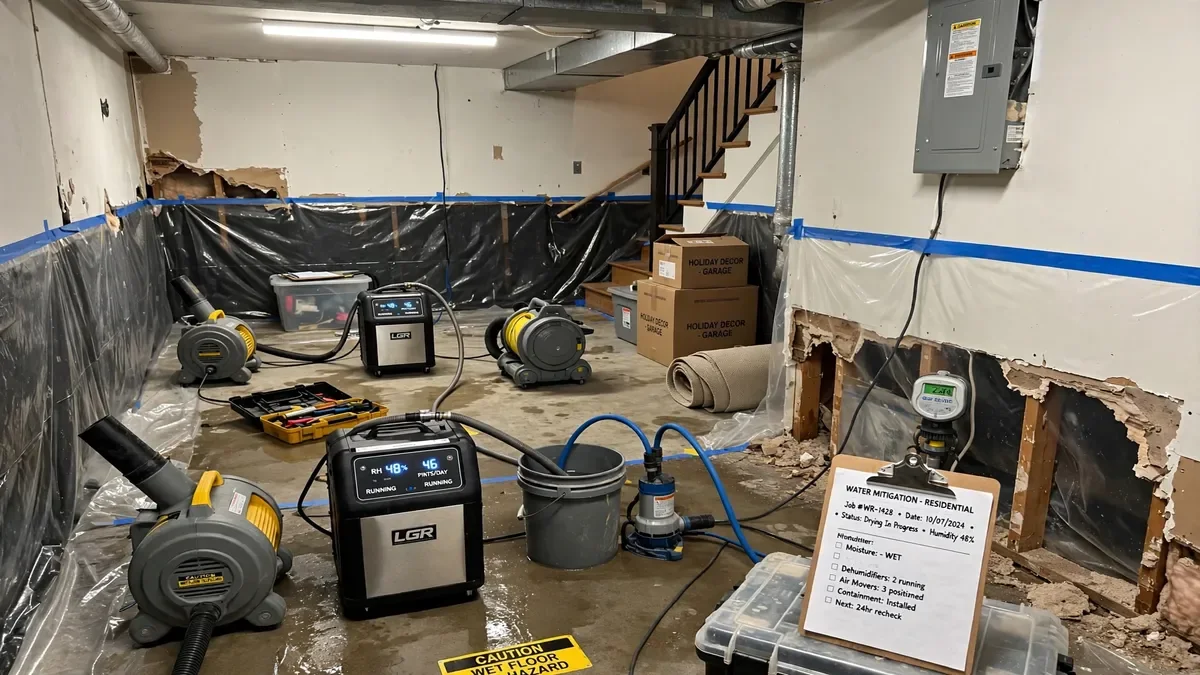
Water mitigation in Lake Forest, CA is the emergency stage after a leak or flood, when the goal is to stop the damage from growing. It covers pulling out water, removing what cannot be saved, and starting the drying. Call the 24/7 line and the price is quoted before work starts.
- First 72 hours
- Tear-out of ruined materials
- Drying equipment set
- Price quoted first
Mitigation or Restoration? What Each Stage Covers
People use the two words as if they meant the same thing, and the difference affects your insurance claim. Mitigation limits the loss. Restoration rebuilds what the loss destroyed. A full job usually includes both, in that order.
| Stage | Goal | Typical work | When it happens |
|---|---|---|---|
| Mitigation | Stop further damage | Water shutoff, extraction, removal of ruined materials, antimicrobial treatment, drying equipment set, board-up or tarping if the structure is open | First hours to the first few days |
| Restoration | Return the home to its pre-loss condition | Replacing drywall, insulation, flooring, cabinets, and paint once the structure is dry | After drying is verified |
The full job is described under the water damage restoration page. This page is about the emergency stage that comes first.
The First 72 Hours, Hour by Hour
Mitigation follows a clock because water and mold both do. The industry reference for this work is ANSI/IICRC S500, the standard for professional water damage restoration. This is the usual sequence, and every stage depends on how quickly the crew did the one before it.
| Time | What should happen | What is at stake |
|---|---|---|
| First hour | Source stopped, power made safe, photographs taken | Every extra gallon enlarges the wet area |
| Hours 1 to 4 | Standing water pumped out and wet carpet and padding assessed | Water wicks up walls and into subfloors |
| Hours 4 to 24 | Unsalvageable materials removed and drying equipment placed | Clean water can degrade and surfaces begin to stain |
| Hours 24 to 48 | Equipment running and moisture readings logged | Mold can begin growing on wet materials in this window |
| Hours 48 to 72 | Readings checked, equipment adjusted, remaining wet spots targeted | Hidden moisture in walls and under floors |
Your Policy Expects You to Mitigate
Most homeowners policies require you to take reasonable steps to protect the property from further damage after a loss. Hiring mitigation counts. Insurers commonly reimburse emergency mitigation on a covered claim, and some will not pay for damage that grew because nobody did anything.
Photograph the loss before anyone removes anything, and keep the mitigation invoice, the moisture readings, and a list of what the crew took out. Do not sign a rebuild contract until your adjuster has seen the damage and agreed to the scope.
If you are unsure whether your policy covers the loss, start mitigation anyway and ask your agent the same day. Damage that is still wet when the adjuster arrives is a smaller fight than damage that has already spread.
What to Do While You Wait for the Mitigation Crew
The minutes before the crew arrives are when most people get hurt or make the loss worse. These steps keep you safe and keep the damage from growing.
- Stay out of water near electricityStanding water that reaches outlets, cords, or the panel can energize. Stay clear and call 911 or the utility from a dry spot.
- Do not walk under a sagging ceilingA ceiling holding water can fail without warning. Keep people out of the room and poke a small hole only if you can do it safely from a distance.
- Keep children and pets awayWater from drains, toilets, or the ground can carry bacteria. Treat it as contaminated until a professional says otherwise.
- Do not use ceiling fans or the HVAC on wet areasRunning them can spread moisture and contamination through the house.
- Leave wet materials where they areDo not throw out padding or drywall before it is photographed. The adjuster will ask to see the loss.
What Gets Removed and Why
Tear-out is the part of mitigation that surprises people. The rule is simple. The crew removes materials that cannot dry in time or that contamination ruined, and keeps those that can dry.
- Carpet paddingPadding acts like a sponge and rarely dries well. It is usually removed even when the carpet above it is saved.
- Baseboards and the lower drywallWhen drywall has wicked water upward, a cut is made above the wet line so the wall cavity can dry. This is often called a flood cut.
- Wet insulationInsulation holds water against framing and loses its value when soaked. It is normally replaced.
- Engineered and laminate flooringThese products swell and delaminate quickly. Solid hardwood can sometimes be dried, but not always.
- Anything touched by sewagePorous materials contaminated by Category 3 water are removed, not cleaned.
Water Losses Specific to Lake Forest Homes
Many Lake Forest losses start upstairs. In the lake neighborhoods and the townhome clusters of Foothill Ranch, a failed water heater or supply line in one unit can soak the ceiling and walls of the unit below. Tell your association or property manager right away, because shared walls and shared lines affect who pays and who must grant access.
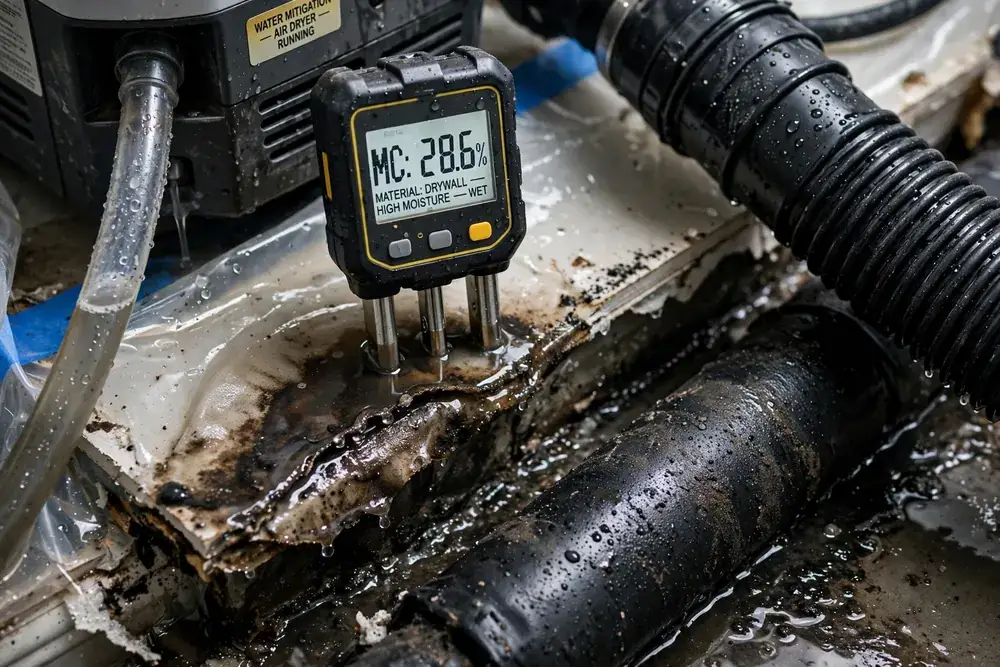
Slab homes, including the newer Baker Ranch tracts, hold water differently. Water that gets under flooring has nowhere to drain, so the wet area spreads sideways before anyone sees it. Moisture mapping with a meter is how mitigation finds it.
Hillside lots in Portola Hills can see water enter at the wall edge during heavy rain. If the water came from a plumbing failure instead, leak detection finds the source so the claim and the repair address the same cause.
What Drives the Cost of Water Mitigation
Mitigation is usually billed by the work and the equipment days, not as a lump sum. A written scope before work starts lets you compare it with your adjuster's estimate.
Want your real number? Call (833) 521-1033. The price is quoted before work starts.
Call (833) 521-1033Mitigation for Homes Near Parks and Creeks
Homes beside Serrano Creek, Pittsford Park, and Whiting Ranch Wilderness Park see both plumbing leaks and storm runoff. The first step is the same, which is to stop the water and start drying.
Tell the dispatcher whether the water came from a pipe or from outside, since each needs a different plan.
Water Mitigation Questions from Lake Forest Homeowners
No. Mitigation is the emergency stage that stops the damage from growing. Restoration is the rebuild afterward. Read about the whole job under water damage restoration.
As soon as the source is stopped. Mold can begin on wet materials within 24 to 48 hours, so mitigation started the same day usually saves more of the structure.
Not always. Carpet that got clean water and is caught fast can sometimes be dried in place, but the padding under it is usually replaced. Contaminated water means both go.
On a covered loss, it commonly reimburses reasonable emergency mitigation. Coverage depends on the policy and the cause, so confirm with your agent and keep every invoice.
The pipe repair is a plumbing job and the cleanup is mitigation. For the pipe, see our page on burst pipe repair. Mitigation can start while the repair is being scheduled.
Yes. The line is open 24/7, including holidays. Call (833) 521-1033 and describe where the water came from and which rooms are wet.
Yes, around the clock. Water that starts upstairs in a 92630 condo or a 92610 townhome spreads to neighbors quickly, so the sooner the call, the smaller the drying job.
Water Still Spreading?
Call the 24/7 mitigation line. Every hour of delay widens the area that has to be dried.
Call (833) 521-1033Service Area Map: Lake Forest, Foothill Ranch, Portola Hills
The map shows the Lake Forest area we dispatch to, including ZIP codes 92630, 92610, and 92679.