Emergency Water Damage Restoration in Lake Forest, CA
Water damage restoration in Lake Forest, CA removes standing water, dries the structure, and stops mold before it starts. The sooner drying begins, the less of the floor, wall, and ceiling has to be replaced. Call the 24/7 line and the price is quoted before work starts.
- 24/7 emergency line
- Extraction and drying
- Moisture mapped and documented
- Price quoted first
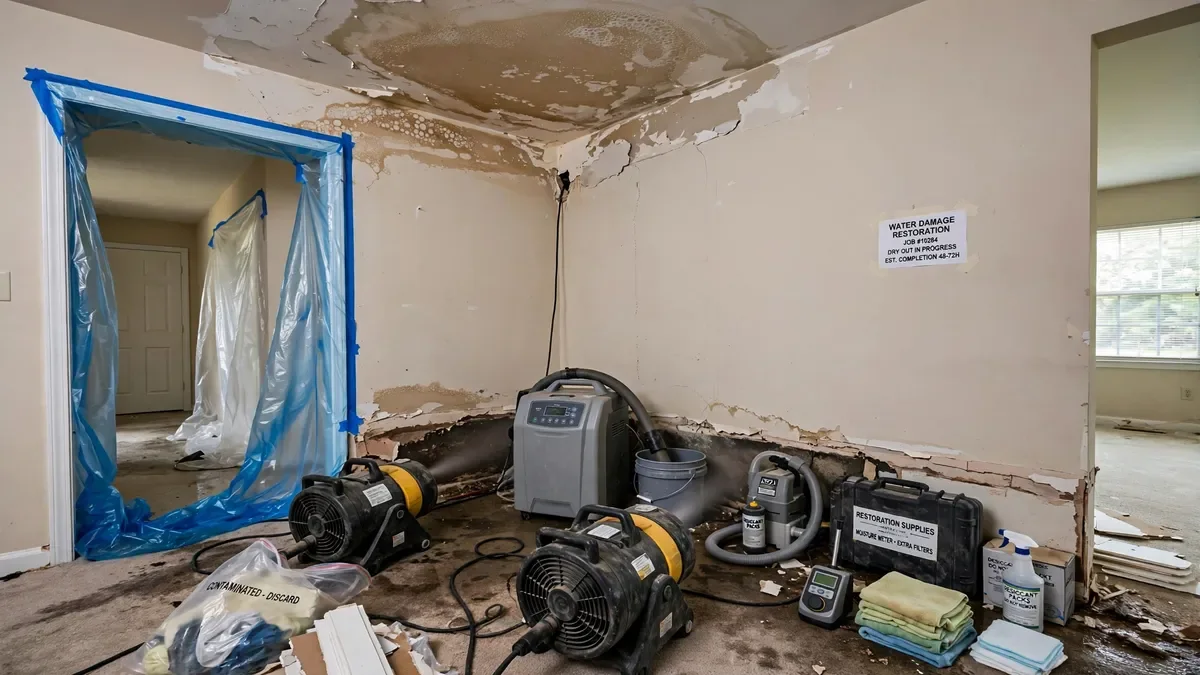
The First Hour: What to Do Before Help Arrives
Safety comes first. If water has reached outlets, cords, or the electrical panel, stay out of the water and call 911 or the utility from a dry spot.
- Stop the sourceClose the main water shutoff if a pipe or fixture is the cause. For the broken pipe itself, see our page on an emergency plumber in Lake Forest.
- Keep clear of electricityDo not stand in water near outlets, power strips, or appliances. Switch off the breaker only if the panel is dry and you can reach it without stepping in water.
- Photograph and video everythingRecord the water, the damage, and any damaged belongings before anything is moved. Insurers ask for it.
- Lift what you safely canRaise furniture legs off wet carpet and move small valuables to dry rooms. Do not strain to move heavy pieces.
- Skip the household vacuumA standard vacuum is not made for water and can be a shock hazard. Leave extraction to proper equipment.
Water Categories: Why the Source Matters
The industry reference for professional water damage restoration is ANSI/IICRC S500. It sorts water by category, which is how contaminated it is, and by class, which is how much of the structure is wet.
| Category | Typical source | How it is usually handled |
|---|---|---|
| Category 1, clean | A broken supply line, a faucet left running, or fresh rainwater | Often dried in place if the response is fast |
| Category 2, gray | A washing machine or dishwasher overflow, or clean water left standing for days | Contaminated. Porous materials such as carpet padding are often removed |
| Category 3, black | Sewage backup, or flooding from the ground surface | Heavily contaminated. Porous materials are removed, not dried |
Clean water that sits can degrade to a higher category, which is one reason speed matters.
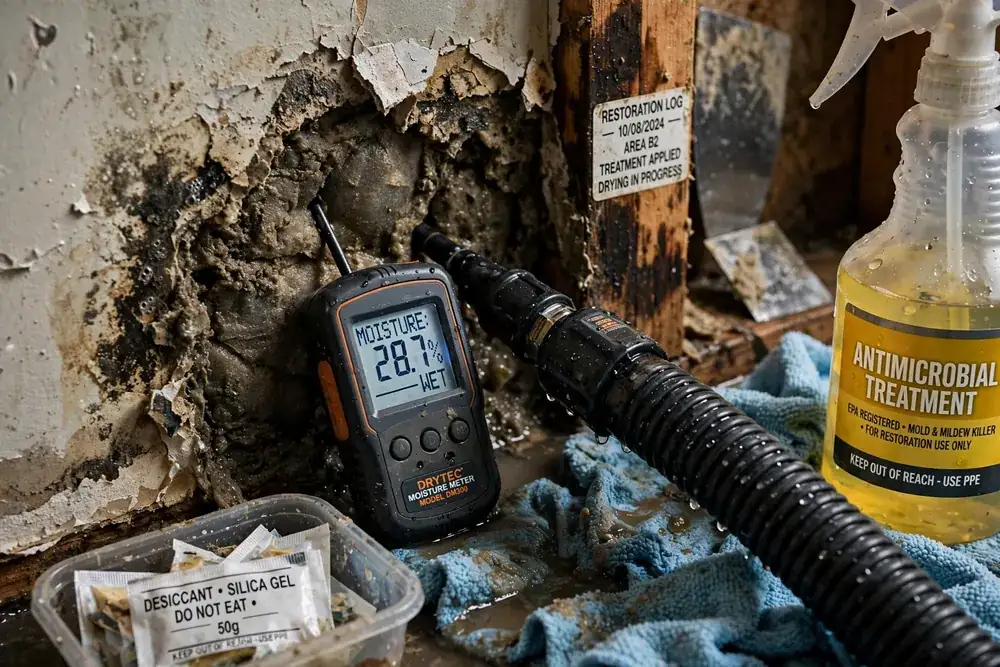
Four Classes of Water Damage
Class describes how much water the structure has absorbed and how fast it will evaporate. It sets the amount of drying equipment.
Class 1
A small area with materials that absorb little water, such as a wet section of tile floor.
Class 2
A whole room of wet carpet and padding, with moisture wicking up the walls.
Class 3
Water from above that has soaked ceilings, walls, insulation, and floors.
Class 4
Deep saturation in dense materials such as hardwood, plaster, or concrete that dries slowly.
Why the First 48 Hours Matter in Lake Forest
Southern California storms show how fast water finds a way in. In December 2025 the governor declared a state of emergency in six counties, Orange County among them, ahead of a series of atmospheric river storms. Heavy rain tests roofs, window flashing, and the drainage around a house, and slow leaks into walls are common after a wet week.
Hillside lots in Foothill Ranch and Portola Hills shed water toward the houses below, so grading and gutters matter. On slab homes such as those in Baker Ranch, water that enters at the wall edge spreads under flooring before anyone sees it, and laminate or wood can cup in days.
The EPA notes that mold can begin to grow within 24 to 48 hours on wet materials. That is the practical clock. Drying that starts the same day often saves flooring and drywall that would otherwise be torn out.
How Structural Drying Works
Drying usually takes a few days, and the equipment stays until readings say the structure is dry. The emergency first stage of the job has its own page, water mitigation.
Assess and map
Moisture meters and a thermal camera find where the water went, including behind walls.
Extract
Pumps and extractors remove standing water and as much absorbed water as possible.
Dry
Air movers and dehumidifiers pull moisture out. Readings are checked on each visit.
Verify and document
Final readings confirm dry-standard levels, and the records support your claim.
Insurance, Documentation, and What a Claim Needs
Most policies cover sudden and accidental water damage, such as a burst pipe, and often exclude slow leaks and flooding from rising ground water, which needs separate flood coverage. Read your policy or ask your agent early, because the first steps you take can matter.
Your policy likely expects you to take reasonable steps to stop further damage. Drying counts. Keep receipts, photographs, and the moisture log, because the adjuster will ask for them. Do not throw away wet materials before they are photographed unless they are a health hazard.
If you do not know where the water came from, finding the source is the first job. Leak detection locates a hidden leak so the repair, and the claim, address the right cause.
What Drives the Cost of Water Damage Restoration
Cost tracks the amount of water, how contaminated it is, and how long the equipment runs. A quick response limits all three.
Want your real number? Call (833) 521-1033. The price is quoted before work starts.
Call (833) 521-1033Water Damage Across the City's Neighborhoods
Water damage in Lake Forest ranges from a failed water heater in an El Toro garage to a leak in a Foothill Ranch townhome that reaches a neighbor. Homes near Serrano Creek and Whiting Ranch Wilderness Park can also take on runoff in heavy rain.
Call early, because drying is faster the sooner it starts.
Water Damage Questions from Lake Forest Homeowners
As soon as possible, ideally the same day. Mold can begin within 24 to 48 hours on wet materials, and floors can warp quickly.
Small spills can be handled with fans and a dehumidifier. Water in walls, under flooring, or in a larger area needs professional equipment and moisture readings, because surface dry is not structure dry.
It depends on the water category and how long it sat. Clean water caught quickly may let carpet be dried in place. Gray or black water usually means the padding is removed.
Many policies cover sudden and accidental damage, such as a burst pipe, and often exclude slow leaks and ground flooding. Photograph everything, keep receipts, and call your agent before starting repairs.
That is Category 3 water and a health hazard. Keep people and pets out, do not touch the water, and call right away. Porous materials will need to be removed, not dried.
Yes. The restoration line is open 24/7, including nights, weekends, and holidays. Call (833) 521-1033 and describe where the water is coming from and how far it has spread.
Water damage response is available across 92630, 92610, and 92679. Heavy rain can send water into hillside homes in 92679 and 92610, and the response is the same whatever the source.
Water Soaking the House Right Now?
Call the 24/7 restoration line. The sooner drying starts, the less has to be replaced.
Call (833) 521-1033Service Area Map: Lake Forest, Foothill Ranch, Portola Hills
The map shows the Lake Forest area we dispatch to, including ZIP codes 92630, 92610, and 92679.